
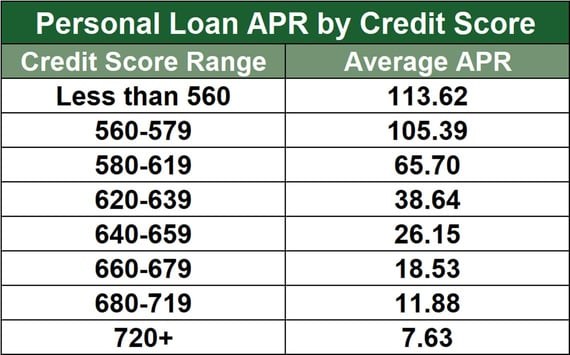
Can I get a personal loan with my current credit score? Yes, you can. But the real answer depends on how much you’re willing to pay for the privilege of being a risk.
You’re probably reading this because you need cash for something specific, maybe a car repair, a medical bill, or a plan to consolidate debt, and your credit score feels like a wall. It is a wall. Lenders use it as a mathematical gatekeeper to decide whether they’ll make money from you or just walk away. If your score is high, the door is wide open. If it’s low, you’ll have to kick the door down or find someone willing to let you in despite the danger.
Lenders don’t care about your intentions. They don’t care that you had a rough year or that you’re a hardworking person trying to get back on your feet. They care about the data. They look at your payment history and your current debt levels and make a cold calculation. This isn’t about “gaming the system.” It’s about understanding what your score actually buys you in the real market.
The Gold Standard: High Scores and the Luxury of Choice
When your score is in the top tier, you aren’t just a borrower; you’re a preferred customer. This is the position everyone wants because it gives you power. You don’t have to take the first offer that hits your inbox. You can shop around, compare terms, and demand better rates because lenders know you could walk away to a competitor in a heartbeat.
At this level, interest rates are at their lowest. You aren’t paying for the lender’s fear. They know you’ll pay them back, so they don’t need to bake a massive “risk premium” into your monthly payment. You get the best terms: longer repayment windows, lower fees, and usually, no prepayment penalties. If you get a tax refund or a work bonus, you can kill the loan early without being punished for it.
Why Timing Matters
Even with a perfect score, don’t just grab any loan. You need to look at the total cost over the entire lifespan of the loan. A lower monthly payment might look great on a Tuesday morning, but if that loan lasts six years instead of three, you might end up paying back twice what you borrowed. Always look at the total amount repaid, not just the monthly chunk.
- Fixed Rates: These stay the same for the whole life of the loan. They offer predictability.
- Variable Rates: These can change. They might start low, but they can climb if the economy shifts.
- Origination Fees: Some lenders take a cut right off the top before you even see the money.
Don’t let a high score make you complacent, though. Even the best borrowers make mistakes by ignoring the fine print. You might find yourself stuck in a loan with a high “origination fee” that effectively cancels out the benefit of your low interest rate. Do the math before you sign.
The Middle Ground: Navigating the “Good Enough” Zone
Most people fall into the middle. You aren’t a credit miracle, but you aren’t a disaster either. You have some history, maybe a few late payments or a high credit card balance, but nothing that makes a lender immediately hang up. This is a tricky spot because you’re caught in a tug-of-war between being a “good” borrower and a “risky” one.
In this zone, offers vary wildly. One lender might give you a reasonable rate, while another looks at your debt-to-income ratio and decides you’re too much of a gamble. You’ll need to be active in your search. You can’t just click a button and expect the best terms to fall into your lap; you have to do the legwork of comparing different types of lenders.
You might consider looking into FastLendGo personal loans or similar products if you find that traditional big banks are being too picky about your specific situation. Sometimes, specialized lenders are more willing to look past a few bumps if your income is steady. It’s about finding a lender whose appetite for risk matches your actual profile.
Is it worth the hassle of applying to five different places? Maybe. If you can avoid even a half-percent difference in your interest rate, you might save enough over three years to pay for a vacation or a big chunk of debt. It’s a math problem, not a feeling.
| Score Category | Lender Attitude | Primary Concern |
|---|---|---|
| Excellent | Aggressive | Total interest cost |
| Good/Fair | Cautious | Income stability |
| Poor | Avoidant | Will you pay us back? |
Lenders in this middle tier often want more than just a score. They want to see your bank statements. They want to see that your paycheck actually hits your account every two weeks. They are looking for evidence of stability to offset the lack of a perfect score.
The Danger Zone: Borrowing When Your Score Is Low
If your score is low, you’re entering territory where the rules change. The lenders who are willing to talk to you aren’t doing it out of the goodness of their hearts. They’re doing it because they expect a lot of people in your position to fail to pay them back. To cover those losses, they charge much higher interest rates. It’s a mathematical necessity for them, but it’s a heavy burden for you.
You need to be incredibly careful here. It’s easy to get desperate when you have an urgent need, and desperation is the worst state of mind for a borrower. You might find yourself looking at “subprime” loans with predatory terms. These can include massive fees tacked onto the principal, or interest rates that make it impossible to ever actually pay down the balance. You end up in a debt cycle that’s very hard to escape.
Avoiding the Debt Trap
Before you sign anything in this category, ask yourself what this money is for. If you are borrowing high-interest money to pay off low-interest debt, you’re likely making a mistake. Unless the new loan has a significantly lower rate than what you’re currently paying, you’re just shuffling deck chairs on a sinking ship.
- Predatory Terms: Watch for loans that allow for “balloon payments” where a massive sum is due at the very end.
- Prepayment Penalties: Some lenders hate it when you pay early because it means they lose out on interest.
- Total Cost: Always ask, “How much will I have paid in total by the time this is done?”
And if you can’t afford the monthly payment on a low-score loan, don’t take it. It is better to have a bad credit score than a bad credit score and a legal judgment against you for unpaid debt. The former is fixable; the latter is a nightmare.
The Strategy: How to Fix Your Position Before You Borrow
If you know your score isn’t where you want it, the best move is often to wait. I know that’s not what you want to hear if you have an emergency, but it’s the truth. Using a bad loan to fix a bad credit score is like trying to put out a fire with gasoline. You’re just adding fuel. If you want long-term financial health, you need a strategy that focuses on the root cause.
Start by looking at your credit utilization. If your credit cards are maxed out, your score will suffer regardless of how well you pay your bills. Paying down those balances is the fastest way to see a jump in your score. It shows lenders that you aren’t living on the edge of insolvency. Once that number drops, you become a much more attractive prospect for better loans.
Another tactic is to check for errors. Your credit report isn’t a holy text; it’s a document that can have mistakes. A single incorrectly reported late payment can tank your score for years. Disputing these errors is free and can have a massive impact on your ability to borrow in the future. It’s tedious, but it works.
Finally, consider the timing of your applications. Every time you apply for credit, it leaves a footprint. Too many footprints in a short period make you look desperate to lenders. If you’re planning to buy a car or a house in the next six months, don’t apply for a personal loan today. Keep your credit profile “clean” for the big things that actually matter.
Stop treating your credit score like a mystery and start treating it like a tool. It’s a tool you can sharpen if you use it correctly.
FAQ
Can I get a personal loan with a low credit score?
Yes, many lenders offer loans for low credit scores, though you will likely face higher interest rates and fewer options.
What credit score is needed for the best personal loan rates?
Lenders typically reserve their lowest interest rates and highest loan amounts for borrowers with excellent credit scores, usually 720 or above.
How does my credit score affect my personal loan interest rate?
A higher credit score signals lower risk to lenders, resulting in lower interest rates, while a lower score often leads to higher rates and increased fees.
Are there lenders that specialize in personal loans for bad credit?
Yes, several online lenders specifically cater to individuals with poor credit, often using alternative data to assess creditworthiness.
Will applying for a personal loan impact my credit score?
A hard inquiry during the application process may cause a small, temporary dip in your credit score.